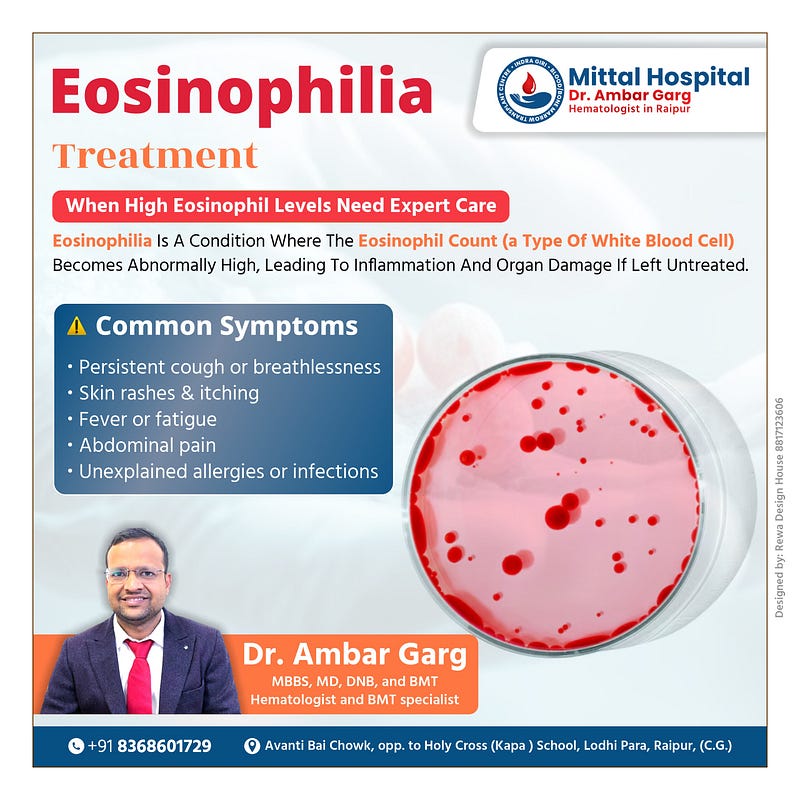
By Dr. Ambar Garg | Hematologist & BMT Specialist | Mittal Hospital, Raipur
When the body faces threats, it launches a microscopic army to defend us. Among these defenders are special white blood cells called eosinophils. They work silently, fighting infections, allergies, and inflammation. However, sometimes the body produces too many of them, leading to a condition called Eosinophilia.

Eosinophilia is not a disease itself. Instead, it is like a smoke alarm telling us something unusual is happening inside the body. Whether the reason is a simple allergy or a more serious underlying disorder, early diagnosis by a specialist is the key to proper treatment and recovery.
What is Eosinophilia?
Eosinophilia refers to a higher-than-normal level of eosinophils in the bloodstream or body tissues. Normally, eosinophils make up 1 to 3 percent of the total white blood cells. When this percentage rises significantly, it can indicate an immune response or disease.
Depending on severity, eosinophilia can be classified into:
• Mild
• Moderate
• Severe
While mild eosinophilia may not cause symptoms, moderate to severe forms can affect vital organs like the heart, lungs, skin, and digestive system.
Common Causes of Eosinophilia
Here are the most frequent medical conditions that trigger high eosinophil counts:
1. Allergic Reactions
Allergies are among the leading causes. Conditions such as asthma, hay fever, nasal allergies, and skin rashes (like eczema or hives) can raise eosinophil levels. The immune system mistakes harmless substances like pollen, dust, or food as threats and overreacts.
2. Parasitic Infections
Worm infections such as roundworms, hookworms, or tapeworms are common in tropical regions. These parasites irritate the intestinal or tissue lining, resulting in an increased immune response and elevated eosinophils.
3. Autoimmune Disorders
In autoimmune diseases, the immune system mistakenly attacks the body’s own healthy tissues. Conditions like inflammatory bowel disease, lupus, and vasculitis may cause persistent inflammation and eosinophilia.
4. Certain Medications
Some medicine allergies are not visible as rashes alone but show up through a high eosinophil count. Common culprits include antibiotics, painkillers, and anticonvulsants.
5. Blood Disorders or Cancers
Rare but serious health problems like leukemia, lymphoma, or bone marrow diseases can also increase eosinophils. In such cases, accurate diagnosis by a hematologist is crucial.
Symptoms of Eosinophilia
Symptoms may vary depending on the underlying cause. Some patients may not feel any changes, while others may experience:
• Breathing difficulties
• Persistent cough or wheezing
• Itchy or swollen skin
• Unexplained fever
• Fatigue and weakness
• Joint or muscle pain
• Abdominal discomfort
If symptoms continue without improvement, medical consultation is recommended.
How is Eosinophilia Diagnosed?
A Hematologist begins diagnosis with a Complete Blood Count (CBC) to measure eosinophil levels. Additional tests include:
• Allergy skin tests
• Stool test for parasites
• Chest X-ray or CT scan (for lung involvement)
• Bone marrow examination (in serious cases)
These tests help identify the real cause behind eosinophil elevation.
Treatment Options
There is no single treatment for eosinophilia. The cure depends entirely on what is causing it:
• Allergy-related eosinophilia improves with antihistamines, inhalers, and avoiding triggers.
• Parasitic infections require deworming medicines.
• Autoimmune causes may need steroids or immune-modulating drugs.
• In blood cancers, advanced treatments like chemotherapy and Bone Marrow Transplant may be needed.
Early detection and timely treatment can prevent long-term organ damage and restore normal health.
When Should You Consult a Hematologist?
You should seek medical help if:
• Blood tests repeatedly show high eosinophil levels
• You experience breathing or swallowing difficulty
• There is unexplained weight loss or fatigue
• Skin rashes or allergies keep worsening
A hematologist can identify the exact reason and offer a personalized treatment plan.

Expert Care for Eosinophilia in Raipur
At Mittal Hospital, Dr. Ambar Garg, a highly experienced Hematologist and Bone Marrow Transplant Specialist, provides comprehensive diagnosis and advanced treatment for eosinophilia and other blood-related disorders.
• Personalized care
• Advanced laboratory support
• Treatment backed by years of expertise
Takeaway Message
Eosinophilia may appear like a simple abnormal blood value, but it often carries important clues about your health. If you or your loved one is facing persistent symptoms or abnormal reports, expert evaluation can make a meaningful difference in recovery.
Your health deserves timely care. Don’t ignore the signs; take action today.