Saturday, 29 November 2025

Top Hospital for Blood Disorders in Raipur – Expert Care by the Best Doctor for Blood Disorders in Raipur

Top Hospital for Blood Disorders in Raipur – Expert Care by the Best Doctor for Blood Disorders in Raipur


Blood disorders can affect anyone—children, adults, or seniors—and sometimes the symptoms are so subtle that they go unnoticed. But timely diagnosis and the right specialist can make a life-changing difference. For those seeking the Best Doctor for Blood Disorders in Raipur, the trusted name is Dr. Ambar Garg, an experienced hematologist known for his accurate diagnosis, compassionate care, and advanced treatment methods.

Located at Avanti Bai Chowk, opposite Holy Cross (Kapa) School, Lodhi Para Kapa, this hospital is recognized as one of the leading centers for blood-related diseases in Chhattisgarh.


Why This Hospital is Raipur’s Top Choice for Blood Disorders

With modern equipment, reliable diagnostic support, and the expertise of Dr. Ambar Garg, the hospital has become a preferred destination for families seeking specialized hematology care. Patients consider it one of the top centers because of its:

  • Advanced diagnostic technologies

  • Accurate medical evaluation

  • Personalized treatment plans

  • Ethical, transparent, and patient-focused care

  • Complete hematology services under one roof

These qualities make the hospital a leading destination for anyone seeking the Best Doctor for Blood Disorders in Raipur.


Comprehensive Hematology Services Available

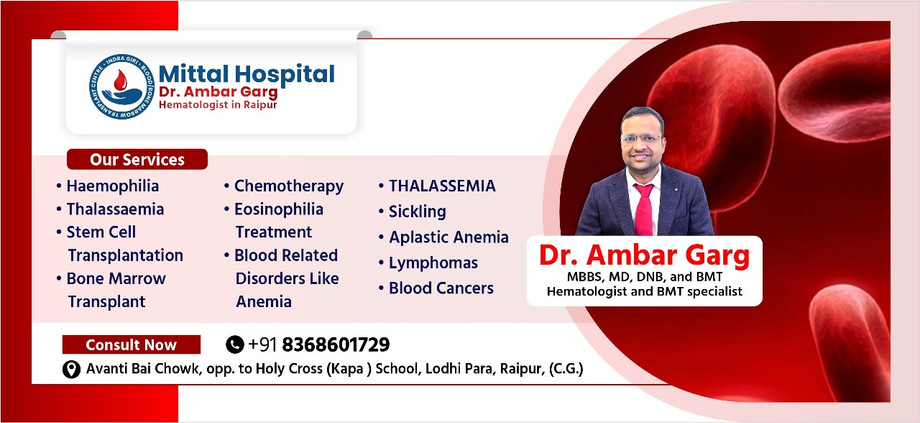
The hospital offers a wide range of treatments and evaluations for all types of blood-related conditions:

  • Anemia & Iron Deficiency

Expert diagnosis and treatment for iron deficiency, B12 deficiency, folate deficiency, and chronic anemia.

  • Leukemia (Blood Cancer)

Advanced management of both acute and chronic leukemia using modern treatment protocols.

  • Lymphoma & Multiple Myeloma

Specialized care for lymph node cancers and plasma cell disorders.

  • Platelet Disorders

Treatment for low platelet count, ITP, and other platelet abnormalities.

  • Bleeding & Clotting Disorders

Expert evaluation and treatment for hemophilia, excessive bleeding, DVT, thrombophilia, and clotting disorders.

  • Thalassemia & Sickle Cell Disease

Complete care, transfusion support, and long-term management for hereditary blood diseases.

  • Bone Marrow Disorders

Accurate diagnosis and treatment for bone marrow-related abnormalities.

Thanks to this broad range of services, patients from across the region visit to consult the Best Doctor for Blood Disorders in Raipur, Dr. Ambar Garg.


Why Patients Trust Dr. Ambar Garg

Dr. Ambar Garg is widely respected for his:

  • Expertise in diagnosing rare and complex blood diseases

  • Modern, scientific, and evidence-based treatment approach

  • Transparent communication and patient-friendly care

  • High success rate in critical hematology cases

  • Compassionate and ethical medical practice

His dedication and skill make him the Best Doctor for Blood Disorders in Raipur for countless patients.


Hospital Address

Avanti Bai Chowk, Opp. Holy Cross (Kapa) School,
Lodhi Para Kapa, Raipur, Chhattisgarh – 492001

Mobile: 8368601729


Connect on Social Media

Monday, 24 November 2025

Understanding Thalassemia: Early Care Can Save Lives

 Understanding Thalassemia: Early Care Can Save Lives

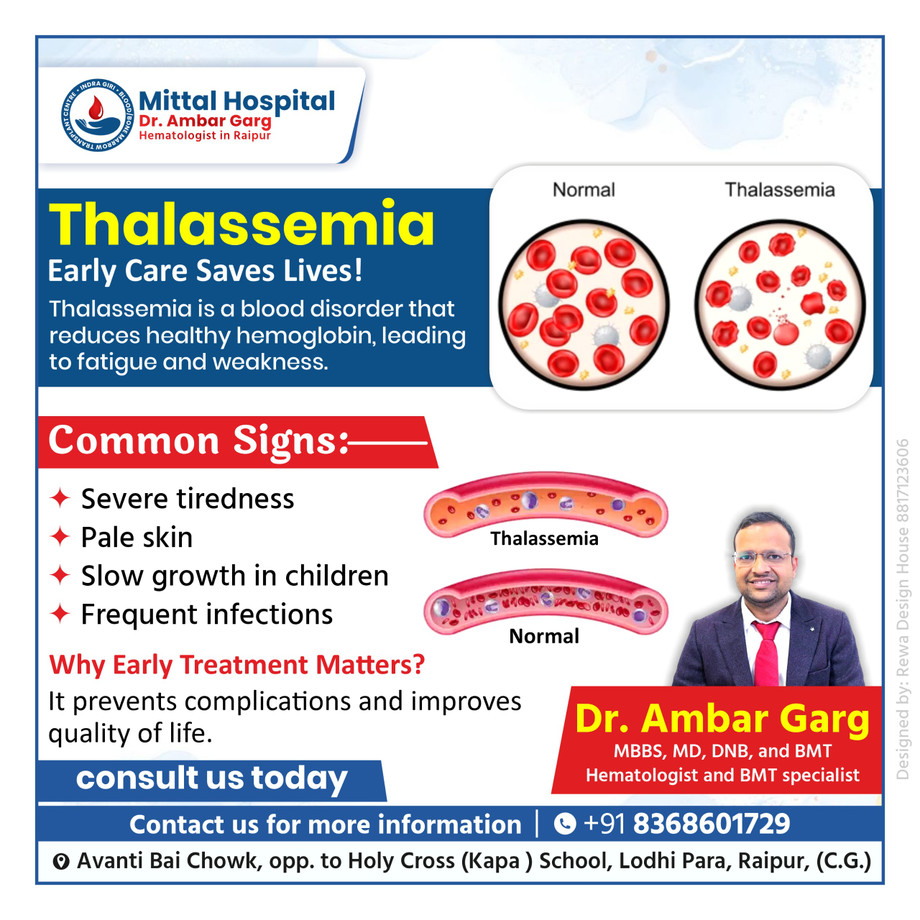
whatsappimage20251120at50724pm.jpeg

Thalassemia is a genetic blood disorder that affects the hemoglobin in the blood, leading to severe health complications such as fatigue, weakness, and infections. It is one of the most common inherited blood disorders, and its impact can range from mild to severe. The condition mainly affects people of Mediterranean, Middle Eastern, African, and Southeast Asian descent. Early diagnosis and appropriate treatment are crucial in preventing complications and improving the quality of life for those affected by this condition.

What is Thalassemia?

Thalassemia is a condition where the body’s ability to produce healthy red blood cells is impaired. Healthy red blood cells are critical for transporting oxygen throughout the body, and when these cells are defective, it leads to severe fatigue and other health problems. The severity of thalassemia can vary. In its most severe form, individuals may require regular blood transfusions and other treatments throughout their lives.

There are two main types of thalassemia: Alpha thalassemia and Beta thalassemia, each caused by a mutation in different globin genes in the hemoglobin protein. People with thalassemia major (the severe form of the disease) require lifelong blood transfusions and medical care.

In the image provided, you can see a comparison between a normal red blood cell and a red blood cell from a person with thalassemia. The thalassemia blood cells are often smaller and misshaped, which affects their ability to transport oxygen efficiently.

Common Signs of Thalassemia

Early detection of thalassemia can make a significant difference in managing the disease and preventing complications. The most common signs of thalassemia include:

  • Severe Tiredness (Fatigue): One of the first signs of thalassemia is extreme fatigue, as the body does not have enough healthy red blood cells to carry oxygen.
  • Pale Skin: Individuals with thalassemia often experience paleness due to a reduction in the number of red blood cells in the body.
  • Slow Growth in Children: In children, thalassemia can result in slower physical growth due to anemia and other complications related to the disease.
  • Frequent Infections: Thalassemia can weaken the immune system, leading to an increased risk of infections.

These symptoms, when identified early, can prompt parents and caregivers to seek medical advice and begin the necessary tests to confirm a diagnosis of thalassemia.

Why Early Treatment Matters

The importance of early treatment cannot be overstated. Thalassemia can lead to a variety of complications, including delayed growth, bone deformities, and organ damage. Without proper management, these complications can be life-threatening. Early intervention can prevent these severe outcomes and improve the overall quality of life.

Thalassemia treatment primarily involves managing the symptoms and preventing complications. One of the most common treatments is blood transfusion therapy, which helps to replace the defective red blood cells with healthy ones. However, frequent transfusions can lead to another issue called iron overload, which requires treatment with iron chelation therapy. In some cases, a bone marrow transplant may be considered, especially for individuals with severe thalassemia, as it can potentially cure the disease.

Other supportive treatments include medications, lifestyle changes, and regular check-ups with a hematologist. A hematologist specializes in blood disorders and will monitor the individual’s condition to provide the best possible care.

Thalassemia and the Role of Early Diagnosis

The diagnosis of thalassemia can be done through blood tests. A complete blood count (CBC) can reveal abnormalities in the red blood cells, and a hemoglobin electrophoresis test can confirm the type and severity of the disease.

Genetic counseling is also an important part of managing thalassemia, especially for couples planning to have children. Genetic testing can determine if an individual carries the thalassemia trait, allowing families to make informed decisions about future pregnancies.

logo.jpeg

Contact Information

If you suspect you or a loved one may have thalassemia or another blood disorder, don’t wait for symptoms to worsen. Early diagnosis and treatment can make a significant difference.

For consultations and more information, contact Dr. Ambar Garg at:

Mittal Hospital

Conclusion

Thalassemia is a serious but manageable condition when diagnosed early. Awareness and prompt medical intervention can significantly improve the quality of life for individuals with thalassemia. If you or someone you know is experiencing symptoms like severe fatigue, pale skin, slow growth in children, or frequent infections, it is important to seek medical advice as soon as possible. Early treatment is key to managing the disease effectively and preventing long-term complications.

Dr. Ambar Garg, a renowned hematologist and BMT specialist, is dedicated to providing the highest quality of care for individuals with thalassemia and other blood disorders. His expertise in hematology and bone marrow transplantation ensures that each patient receives personalized treatment plans aimed at improving their health and well-being.

Monday, 3 November 2025

Understanding Thalassemia – A Genetic Blood Disorder That Needs Awareness, Not Fear


 Thalassemia is a genetic blood disorder that affects the body’s ability to produce enough hemoglobin — the vital protein in red blood cells responsible for carrying oxygen throughout the body. When hemoglobin levels are low, the body cannot supply sufficient oxygen to organs and tissues, leading to anemia, fatigue, and weakness.


 What Is Thalassemia?

Thalassemia is an inherited condition, meaning it passes from parents to children through genes. It occurs when there is a defect in the DNA of cells that produce hemoglobin. The severity of the disorder can vary — from mild (Thalassemia minor) to severe (Thalassemia major).

People with severe forms often require regular blood transfusions and continuous medical care to maintain healthy red blood cell levels.


 Common Symptoms of Thalassemia

  • Persistent fatigue and weakness

  • Pale or yellowish skin

  • Facial bone deformities

  • Slow growth and development in children

  • Abdominal swelling due to enlarged spleen

  • Frequent infections due to low immunity

If these symptoms persist, it’s important to consult a hematologist for early diagnosis and proper management.


 Diagnosis and Treatment

Thalassemia is diagnosed through blood tests, including Complete Blood Count (CBC), Hemoglobin electrophoresis, and genetic testing. Once diagnosed, treatment depends on the severity of the condition:

  1. Regular Blood Transfusions – to maintain hemoglobin levels.

  2. Iron Chelation Therapy – to remove excess iron caused by transfusions.

  3. Folic Acid Supplements – to promote red blood cell production.

  4. Bone Marrow Transplant (BMT) – a potential cure for severe cases, when a suitable donor is available.


 Living with Thalassemia

With proper medical support and regular check-ups, patients with Thalassemia can lead healthy and fulfilling lives. Early detection and awareness are key to preventing severe complications. Parents are also encouraged to undergo genetic counseling and carrier screening before planning a family.


 Awareness Matters

Thalassemia should not be feared — it should be understood and managed. Early testing, continuous care, and spreading awareness can save lives and reduce the disease’s burden on families and communities.

Get tested, get treated, and spread awareness.
Together, we can fight Thalassemia.


 About Dr. Ambar Garg

Dr. Ambar Garg (MBBS, MD, DNB, BMT Specialist) is a highly experienced Hematologist and Bone Marrow Transplant (BMT) Specialist based in Raipur, Chhattisgarh. With years of expertise in managing complex blood disorders, Dr.Ambar Garg has helped numerous patients lead better lives through accurate diagnosis, advanced treatment, and compassionate care.


📍 Mittal Hospital, Raipur (C.G.)
🩺 Address: Avanti Bai Chowk, Opp. Holy Cross (Kapa) School, Lodhi Para, Raipur, Chhattisgarh
📞 Contact: +91 8368601729
🌐 Specialization: Hematology, Bone Marrow Transplant, Blood Disorder Management


Hematology in Raipur - Expert Care by Dr. Ambar Garg at Mittal Hospital

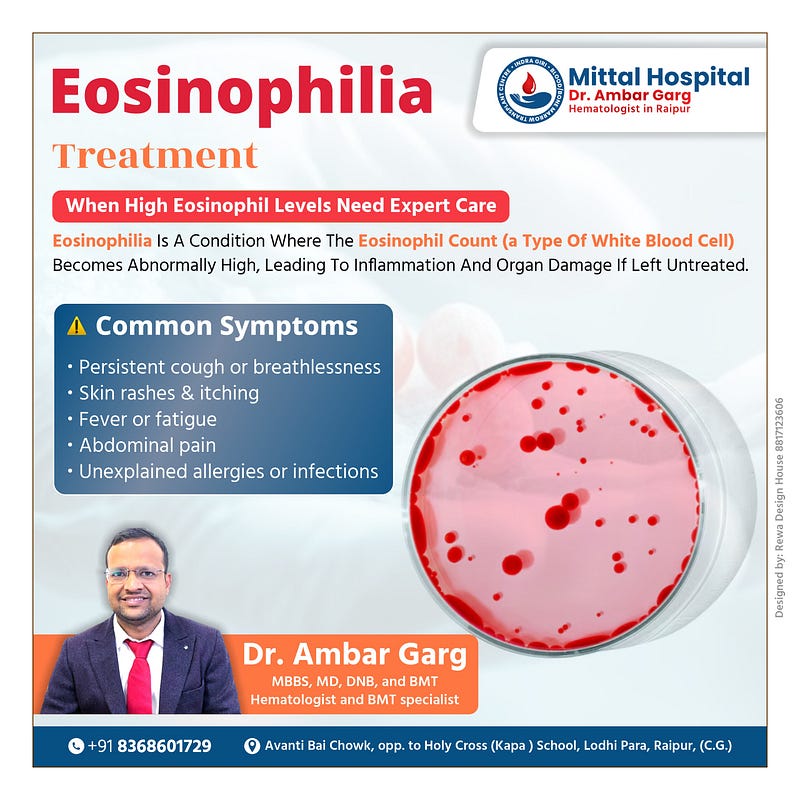
 Eosinophilia Treatment in Raipur — Expert Care by Dr. Ambar Garg at Mittal Hospital Eosinophilia is a medical condition that requires timel...